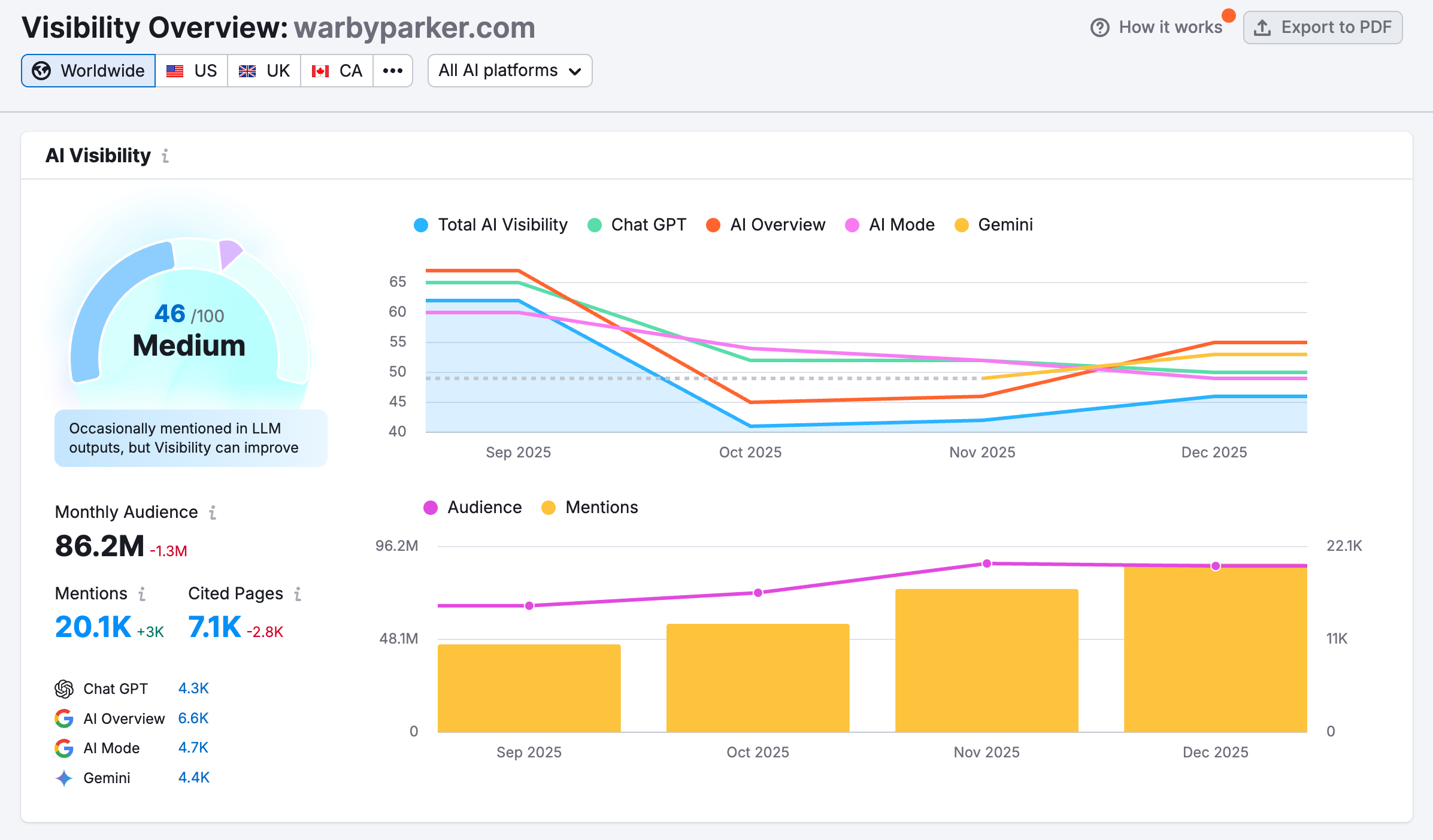
The Visibility Overview report gives you a benchmark of any brand’s overall presence in AI search. Use it to see where your brand (or a competitor) appears in AI-generated answers, spot competitor activity, and identify opportunities for growth.
What the Report Gives You
- AI Visibility Score: A benchmark metric showing the analyzed brand’s presence across AI platforms.
- An overview of your AI mentions: Listing the prompts where the analyzed brand is included—and where it’s missing.
- Visibility over time: Track up to six months of AI visibility data (starting September 2025) to spot trends and changes.
- A list of opportunities for more visibility: Every prompt where the brand is missing represents a relevant topic that can improve visibility.
How to Access the Report
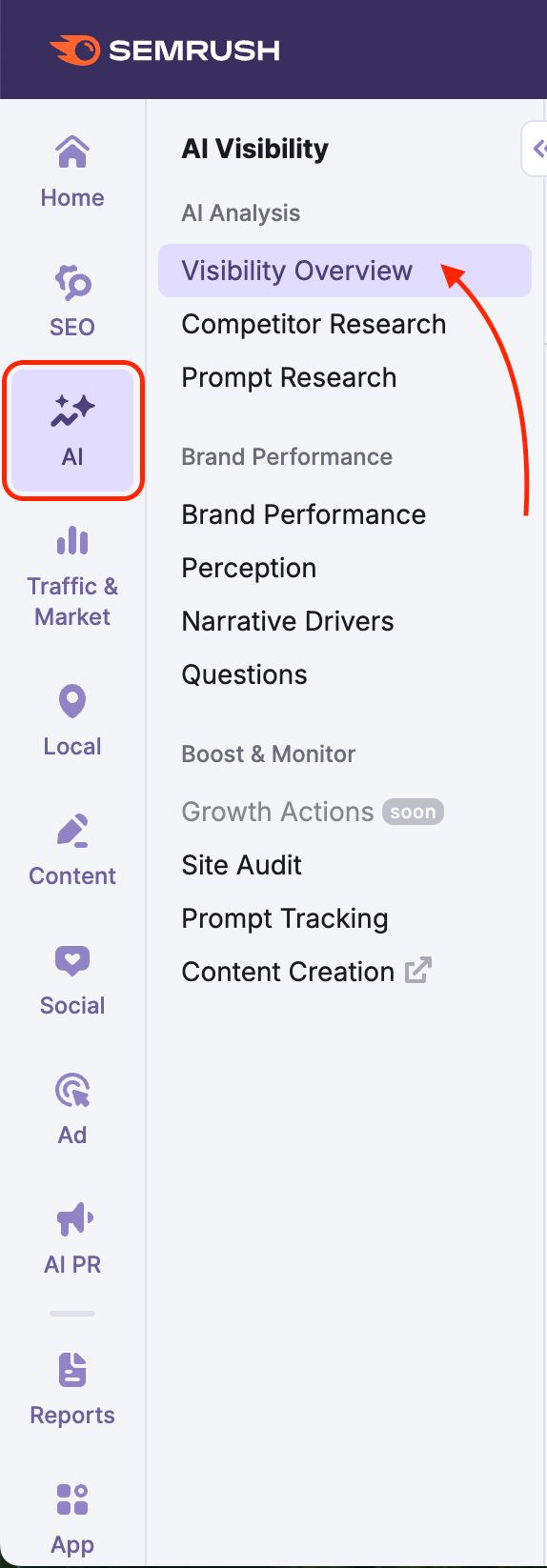
- Go to AI Visibility Toolkit → Visibility Overview.
- Enter your domain in the search bar.
- Click Check AI Visibility.
How to Use the Report
Step 1. Review Your AI Visibility Score
- At the top of the report, you’ll see your brand’s AI Visibility Score (0–100).
- This score reflects how often your brand is mentioned across AI platforms.
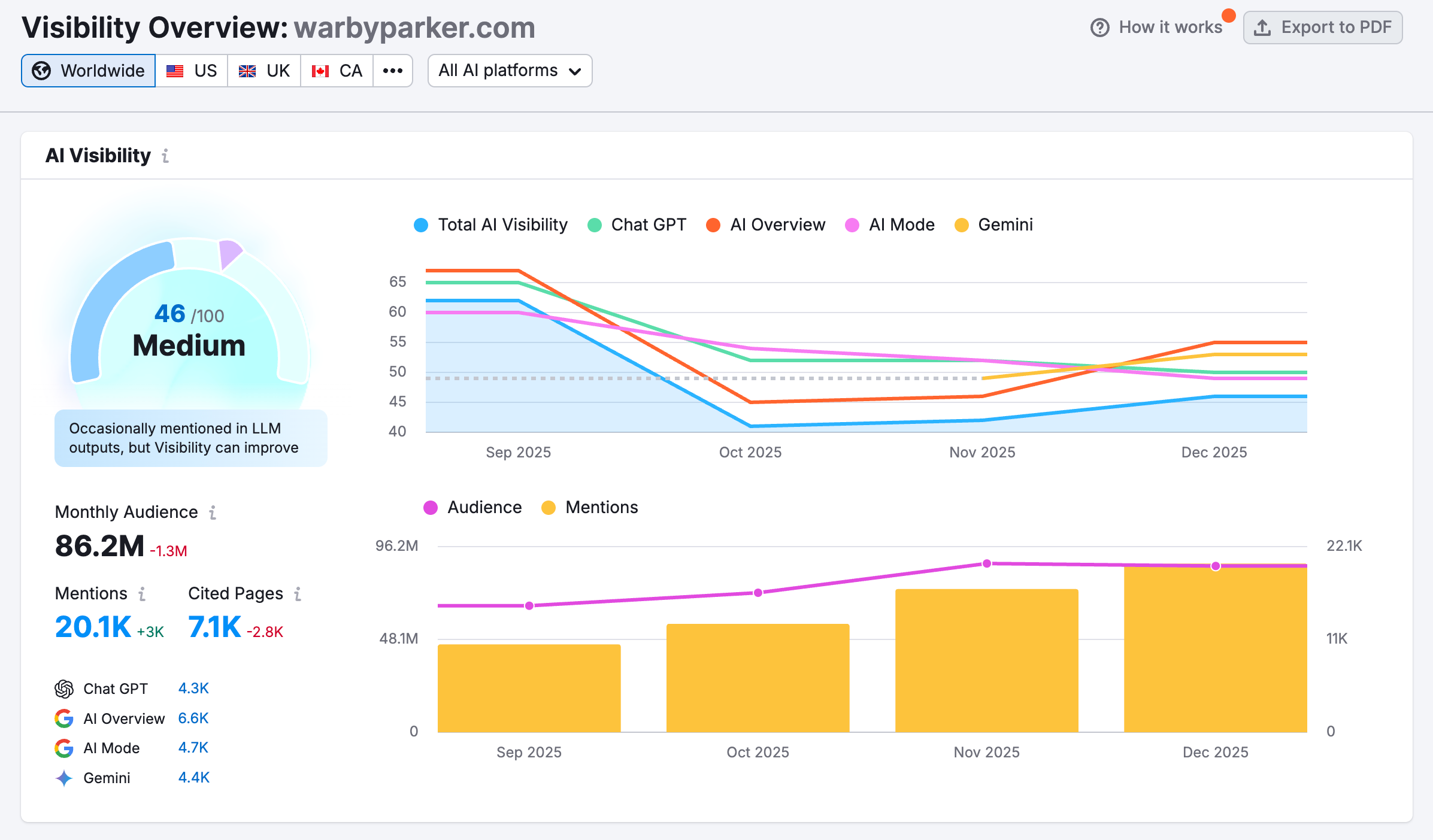
In addition to the score, you’ll see your brand’s:
- Monthly audience: An estimate of the total query audience across all topics where your brand appears. This helps approximate the scale of a brand's exposure.
- Mentions: The number of prompts in which your brand appears in the generated answer.
- Cited Pages: The number of your domain’s pages cited in AI-generated answers.
Step 2. Explore the Topics Table
You’ll also see three “What’s Next” suggestions to explore deeper in the AI Visibility Toolkit.

Next, scroll down to see the table of topics to understand where your brand appears.

Sort the table to find the topics where you are most visible, have the most mentions, or topics with the most overall AI volume.

- Use the filters to find:
- Your Performing Topics: Topics or prompts where your brand is already mentioned in AI-generated answers.
- Topic Opportunities: Prompts where your competitors are visible, but your brand is not. These represent growth opportunities.
- Cited Sources: The websites that AI systems reference when generating answers. These sources influence how your brand is represented in AI.
- Source Opportunities: Sources frequently cited in AI answers that mention your competitors but not your brand. Reaching out to or getting featured in these sources can help improve your AI visibility.
- Cited Pages: Any website or content property owned by your company (e.g., your domain, blog, or knowledge base) that is cited cited in AI-generated answers.
The Cited Pages filter is especially useful for identifying what parts of your content strategy are leading to AI Visibility.
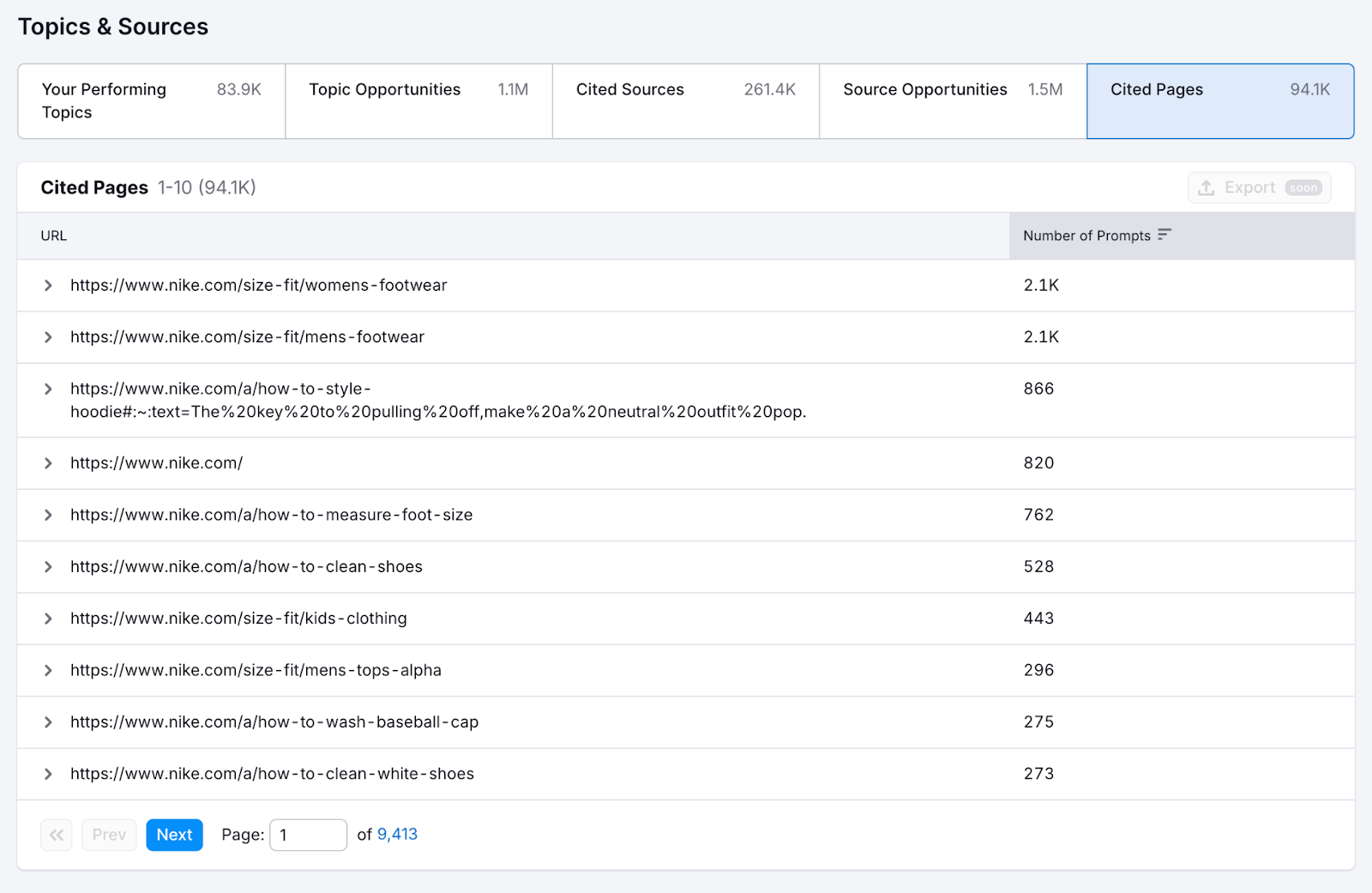
Tip: Use this filter to analyze a competitor’s cited pages and see what pages on their site are most effective in AI search.
Step 3. Find Opportunities for Growth
Use Topic Opportunities or Source Opportunities to uncover where your brand is missing from AI-generated answers while competitors are already visible. These gaps highlight the most relevant areas to expand your AI presence.
Start by refining the competitive context. At the top of the table in the Topic Opportunities or Source Opportunities tabs, select the competitors you want to include or exclude, then click Analyze to refresh the data.
Customizing the competitive set helps eliminate irrelevant results and ensures the insights reflect the brands most important to your current strategy.
- Select Topic Opportunities to see subjects where your brand is absent.

- Select Source Opportunities to discover which sources are citing other brands but not yours.
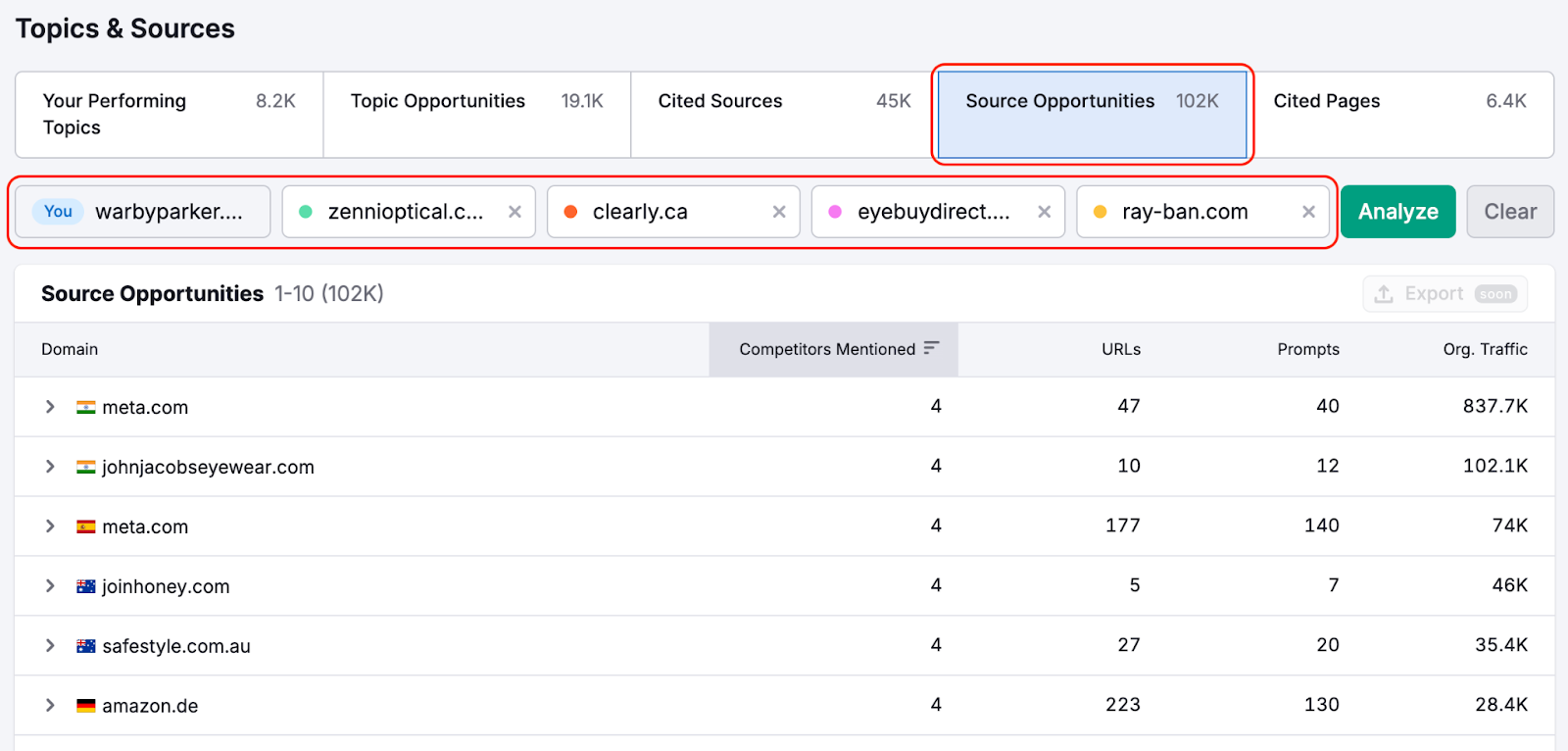
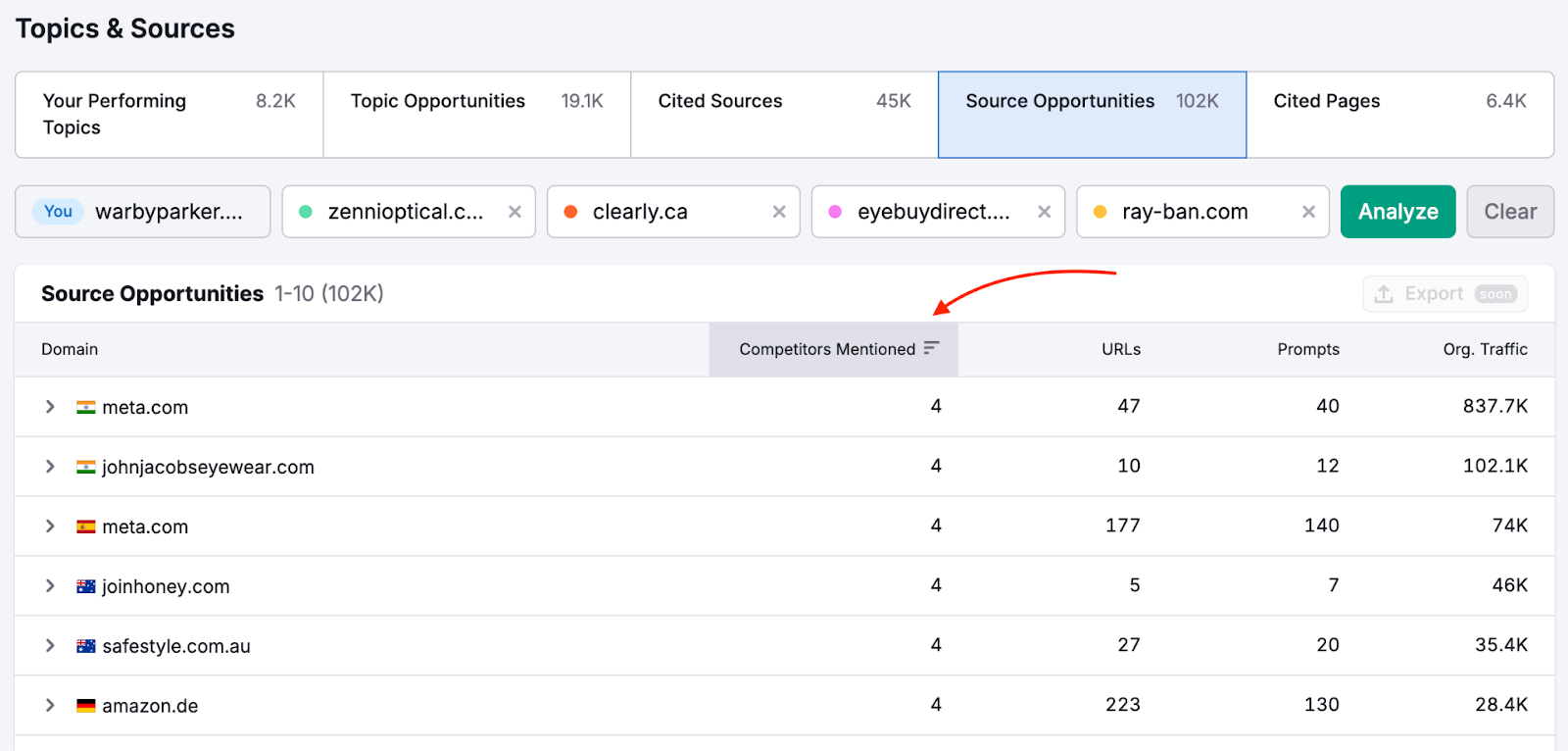
To further prioritize opportunities in these tabs, sort the table by Competitors Mentioned. This column shows how many competitors from your selected competitive set appear in AI-generated responses for each topic or source.
Sorting by this metric helps you identify high-consensus opportunities—topics or domains where multiple competitors are consistently referenced by AI systems while your brand is missing.
After identifying high-priority gaps where competitors appear but your brand does not, use the Sources table to determine how to act. Understanding the type of source AI systems rely on helps you choose the most effective approach to improve visibility and drive traffic.
- User-Generated Content (UGC)
If the citation comes from UGC platforms (e.g., Reddit, Quora), engage with the community by starting a thread, joining discussions, or answering questions.
- Competitor
If the source is a competitor, use their content as inspiration to create your own—either with your team or with the help of the Content Toolkit.
- Non-Competitor Media
If the source is an external but non-competing publication, consider reaching out for collaboration or partnership opportunities, either on your own or via the AI PR Toolkit.
Data & Metrics Explained
Where the data comes from
- The Visibility Overview uses Semrush’s prompt database of 239M+ AI queries, covering Google AI Overviews, AI Mode, Gemini, and ChatGPT with more platforms coming soon.
- Data is refreshed monthly.
- Reports can be run up to 300 times per day per domain.
Key metrics
- AI Visibility Score (0–100): A normalized benchmark showing your brand’s overall share of presence in AI responses.
- Monthly audience: An estimate of the total query audience across all topics where your brand appears. This helps approximate the scale of a brand's exposure.
- Mentions: The number of prompts in which your brand appears in the generated answer.
- Audience: An estimate of how broad the exposure is for prompts mentioning your brand.
- Cited Pages: Your domain’s pages cited in AI-generated answers.
- Sources: External websites or references cited in the AI answer that drive your visibility.
- Missing Prompts: Queries where competitors are mentioned but your brand is absent—representing growth opportunities.